Product of the Month, Week, and Dayon Product Hunt
2026
Brila
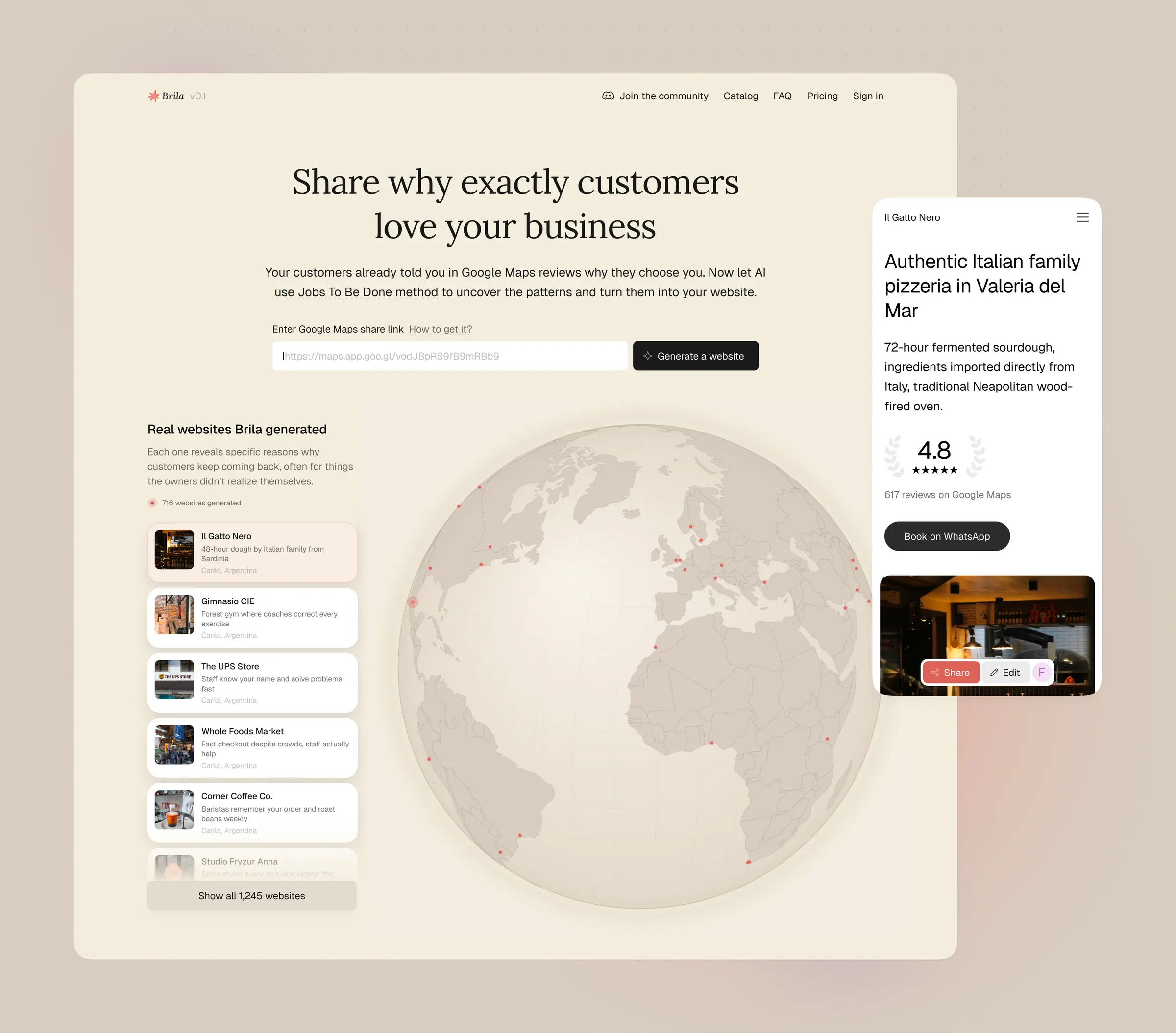
Designed and launched an AI product that generates one-page websites from real customer reviews

Context
Every AI website builder in 2025 can make something that looks good. v0, Lovable, Claude Design – gorgeous layouts in seconds. But go read the text on those pages. "We are a team of passionate professionals dedicated to delivering excellence." That sentence could be a dentist, a dog groomer, or a missile defense contractor. The design problem is solved. The content problem is embarrassing.
Meanwhile, small businesses are sitting on goldmines of real, specific, human language – their Google Maps reviews. "Baristas remember your order and roast beans weekly." "Vets explain clearly and treat anxious pets gently." That's better copy than any AI will hallucinate. It's just stuck in a review feed nobody scrolls.
We thought: what if the website wrote itself from those reviews?
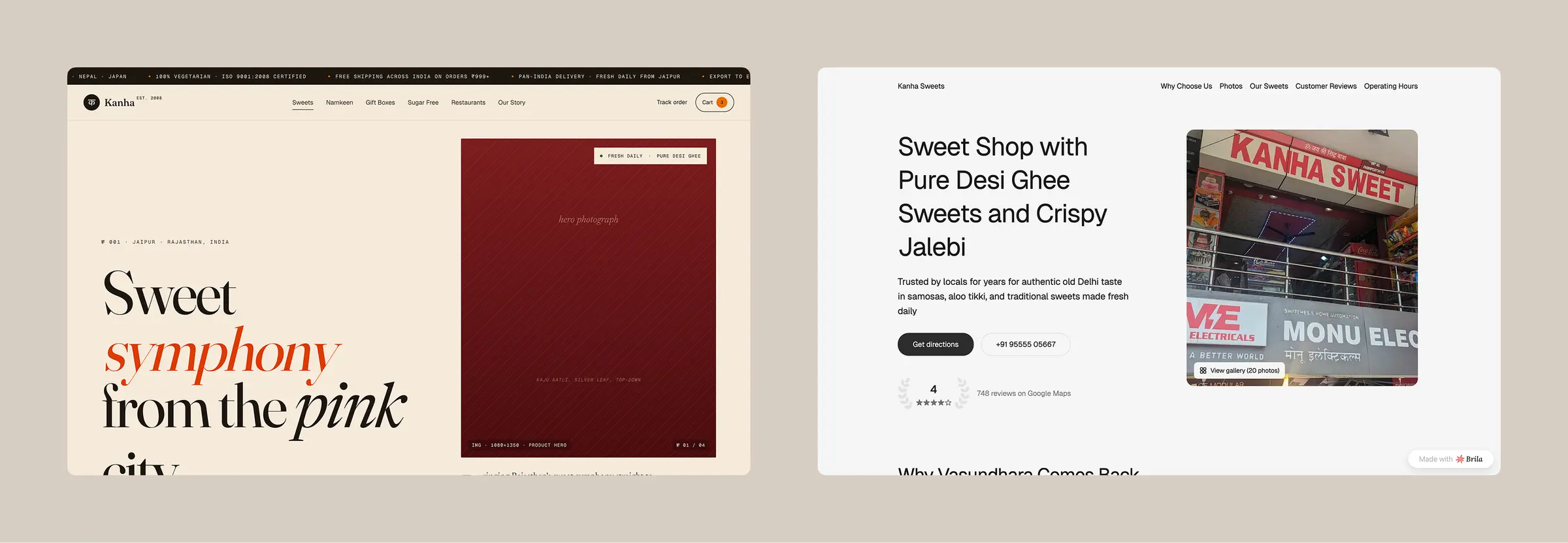
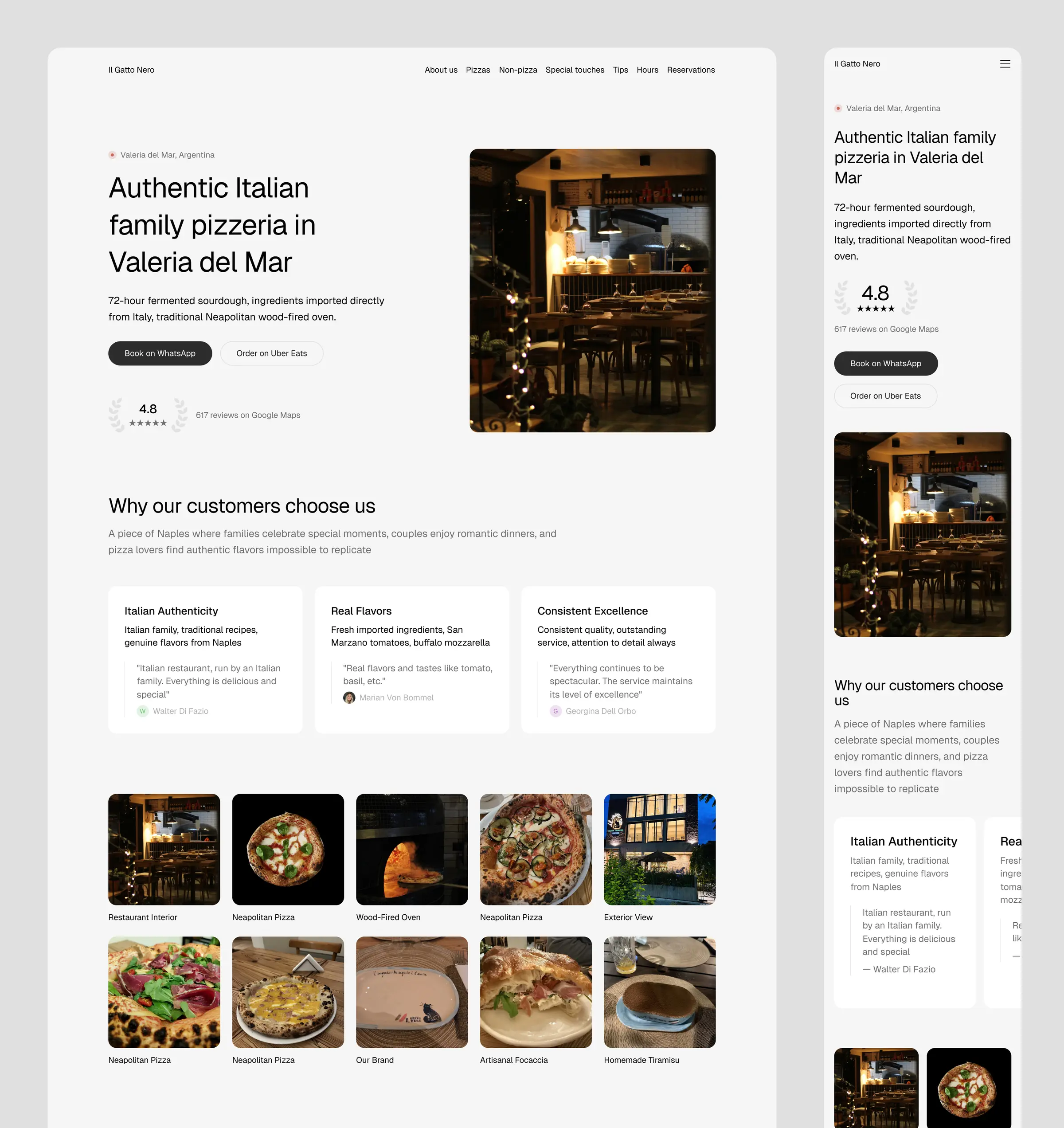
Left: a real business website generated by an Claude Design. Looks okay, but the copy is completely made up. Right: the same business, generated by Brila. Less flashy, but every word comes from actual customer reviews
My role
Small team, big scope. I owned design and launch end-to-end:
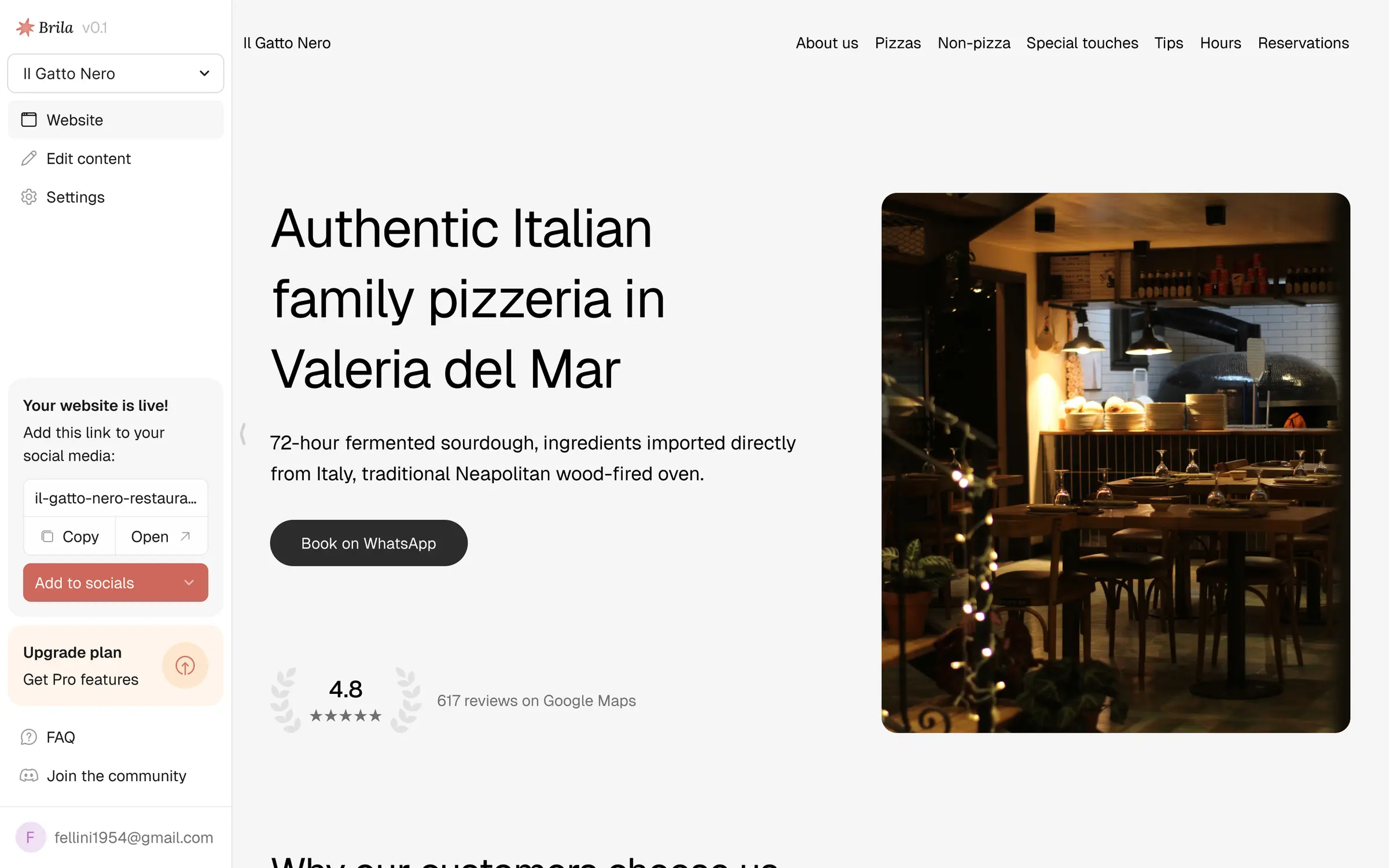
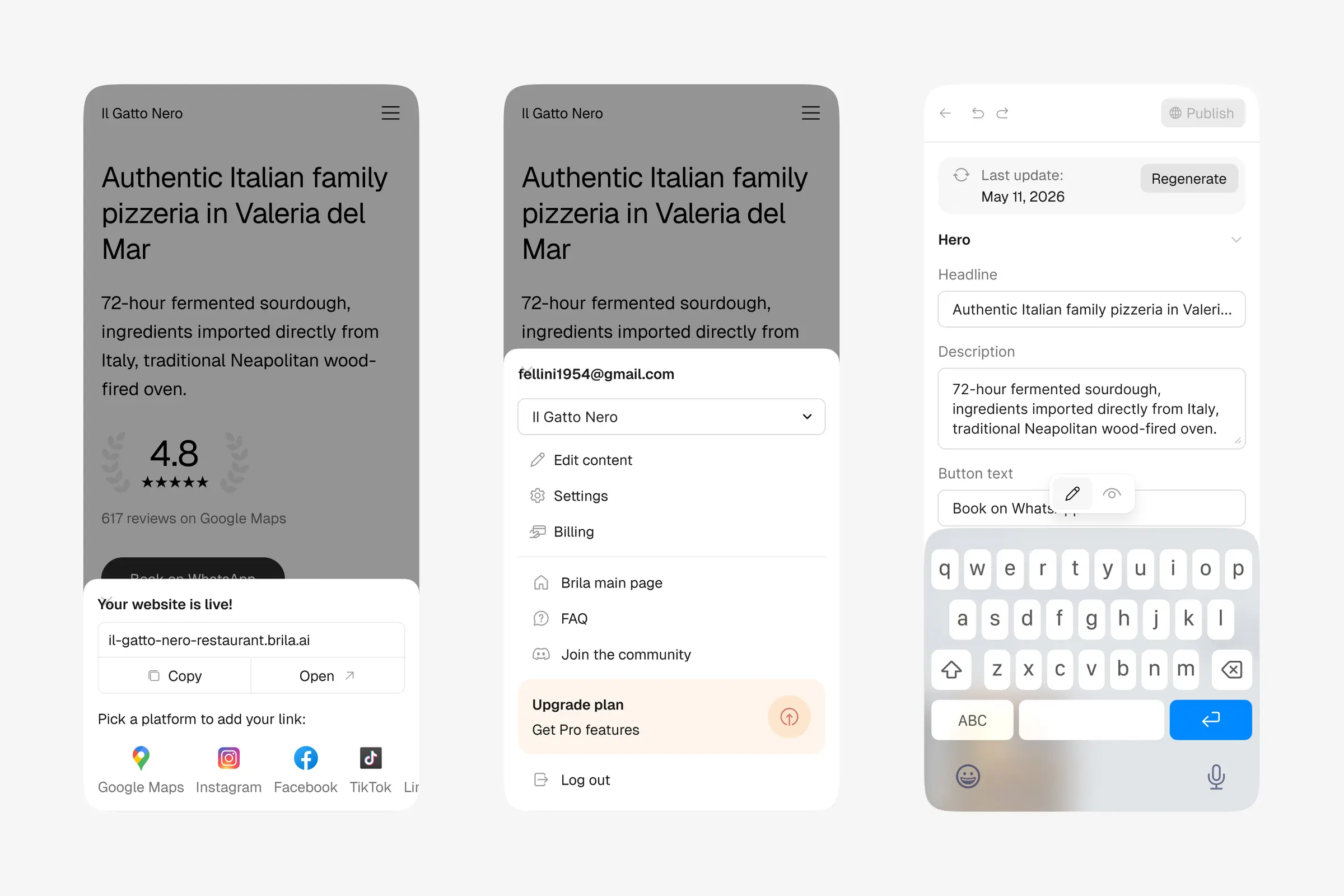
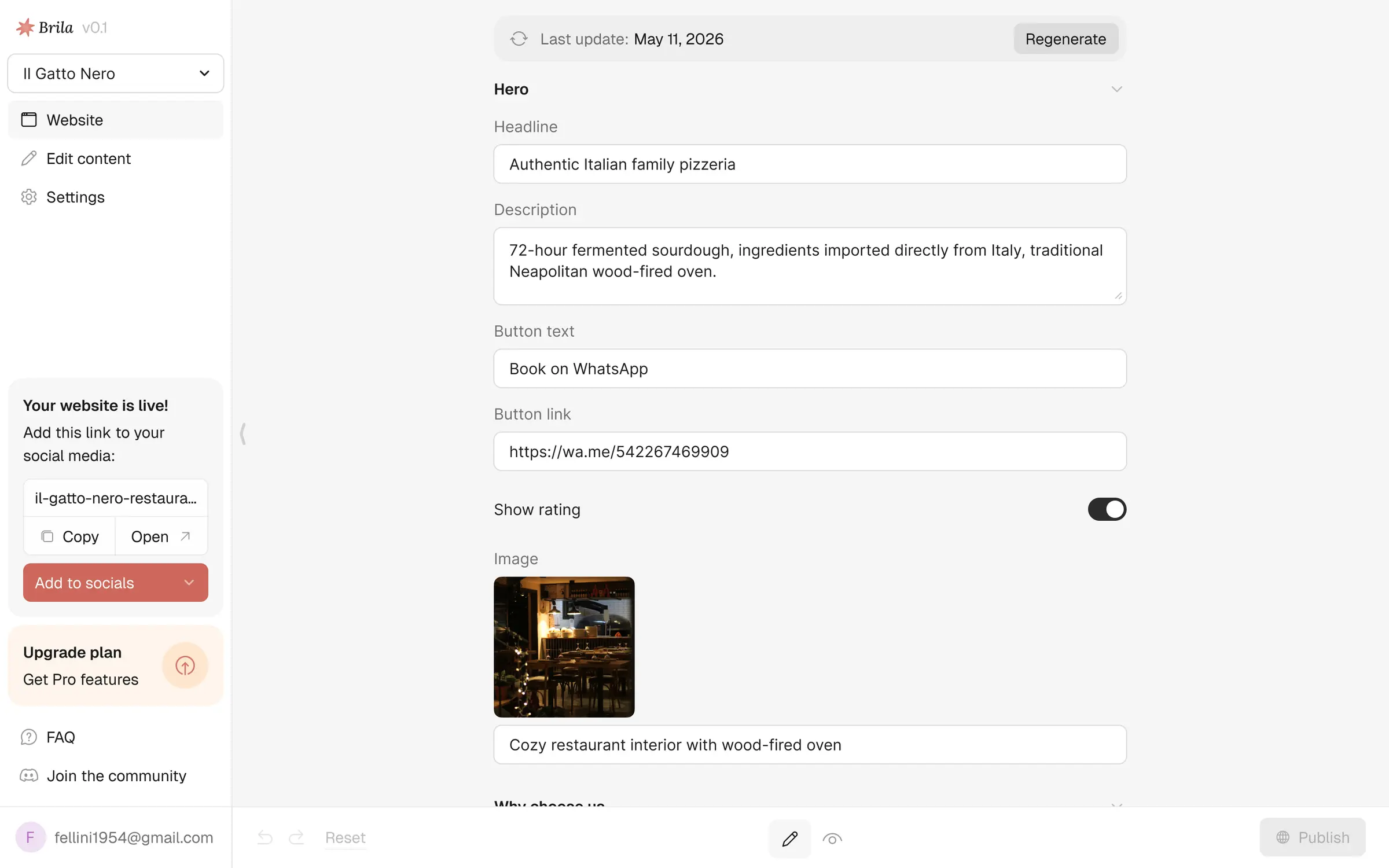
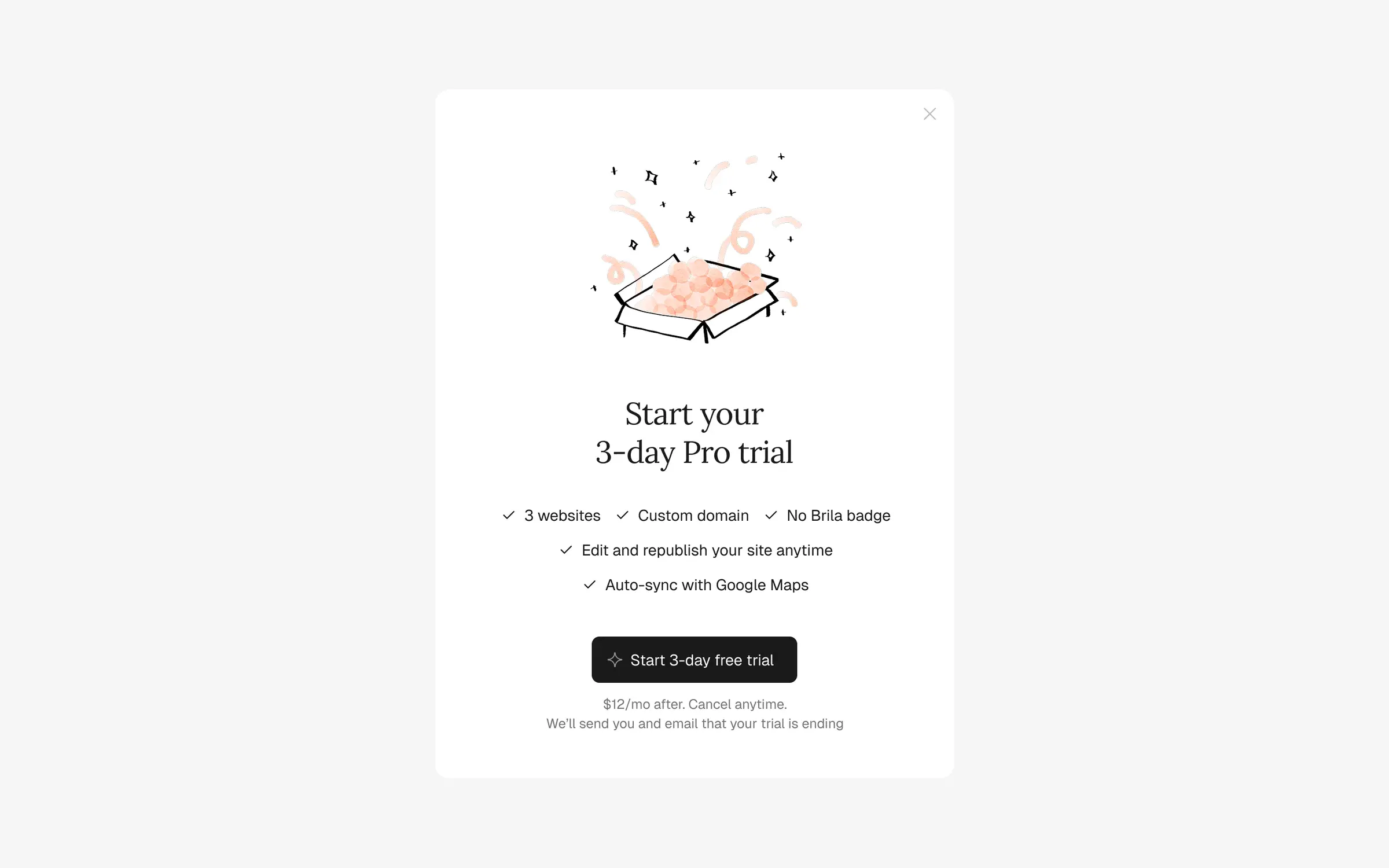
UX. Every flow from "paste a Google Maps link" to "here's your website." Editor, paywall, upgrade flows, pricing, site management. The entire product surface.
UI. Visual design across the board. Landing, generation screen, editor, published sites.
Landing page. Designed it, wrote all the copy myself. Practiced what we preached – content first.
Prototype. Built a full interactive prototype using Claude Code. Not a Figma click-through – a working thing that let us test real flows before engineering touched it.
Product Hunt launch. Wrote the listing, prepared all visuals, planned the Alpha Day strategy, managed launch day from start to finish. This part was its own project.
Key decisions
Content first, design second
Everyone in the space competes on beauty. "Stunning AI websites in 60 seconds." We made a conscious decision to go the other way: invest everything into the copy pipeline, ship with a clean but simple visual layer.
The generated sites won't make a designer gasp. But every sentence on them is something a real customer actually said. That's the whole bet – and it worked.
Prototyping with Claude Code
Normally I'd build a Figma prototype – linked frames, hover states, fake data. For Brila I did something different: I used Claude Code to build a working interactive prototype. Not a click-through, but an actual thing with real inputs, real states, real edge cases.
This changed the design process. I could paste a Google Maps link and see what happens when the business has 12 reviews vs. 400. I could test what the editor feels like with a generated site that has seven blocks vs. three. Edge cases that would've been "we'll figure it out later" in Figma became design decisions early.
The handoff to engineering was also different – instead of annotated mockups, the team had a running thing they could poke at. Less back-and-forth, fewer surprises.
Product Hunt launch
I owned the entire launch. Product Hunt has its own meta-game — timing, visuals, community engagement – and treating it as "just post and see what happens" is how most launches die.
We launched on Alpha Day (3x points for early comments, double boost for makers commenting on other products). I prepared the listing copy, screencast, all visual assets, and a comment strategy in advance. On launch day I was responding to every comment, engaging with other makers, and adjusting messaging in real time based on what questions kept coming up.
The result: Product of the Day, Week, and Month. 1,300+ points. But the real outcome was the traffic – over a thousand sites generated on day one, and the momentum carried for weeks.
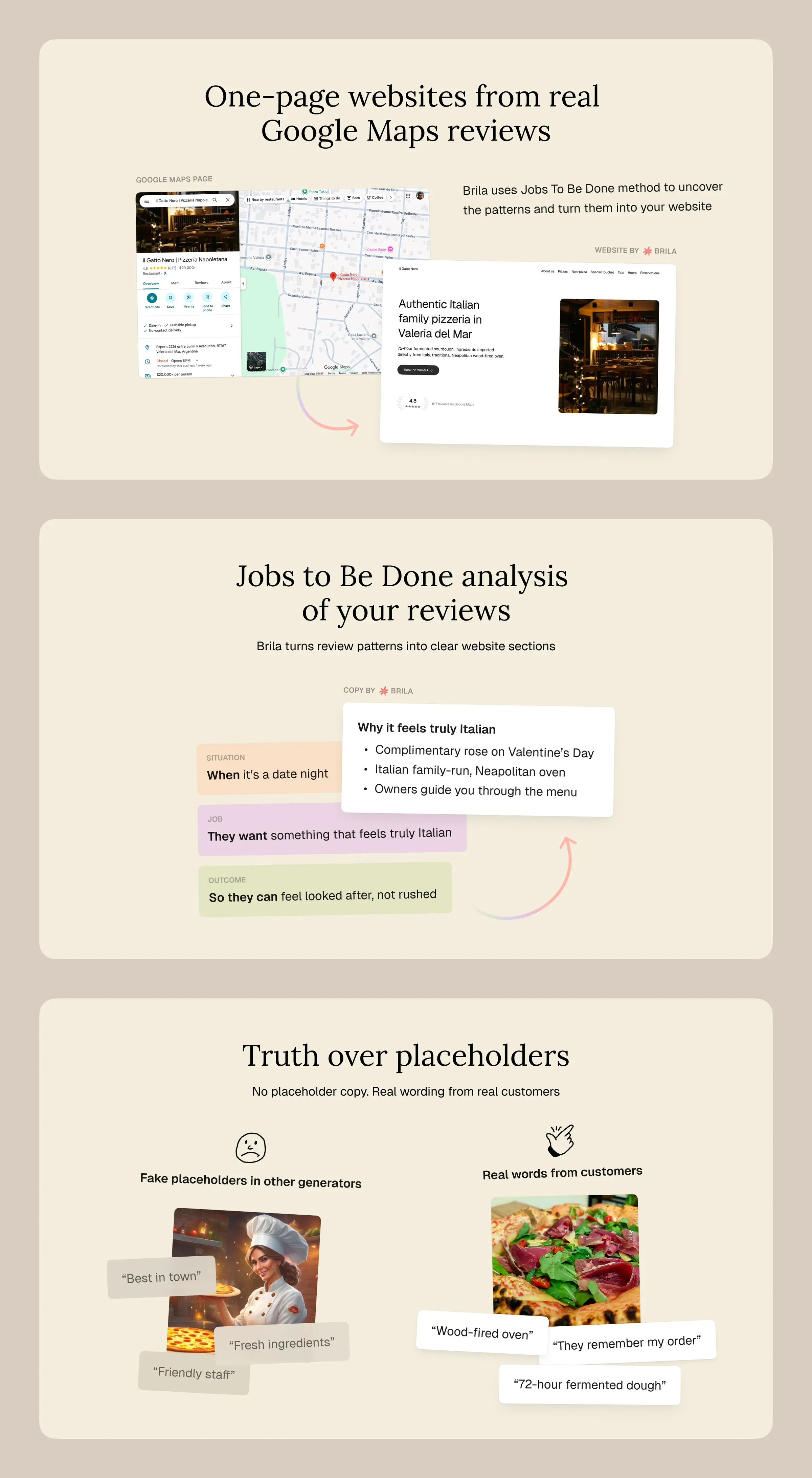
Slides for Product Hunt launch
Results
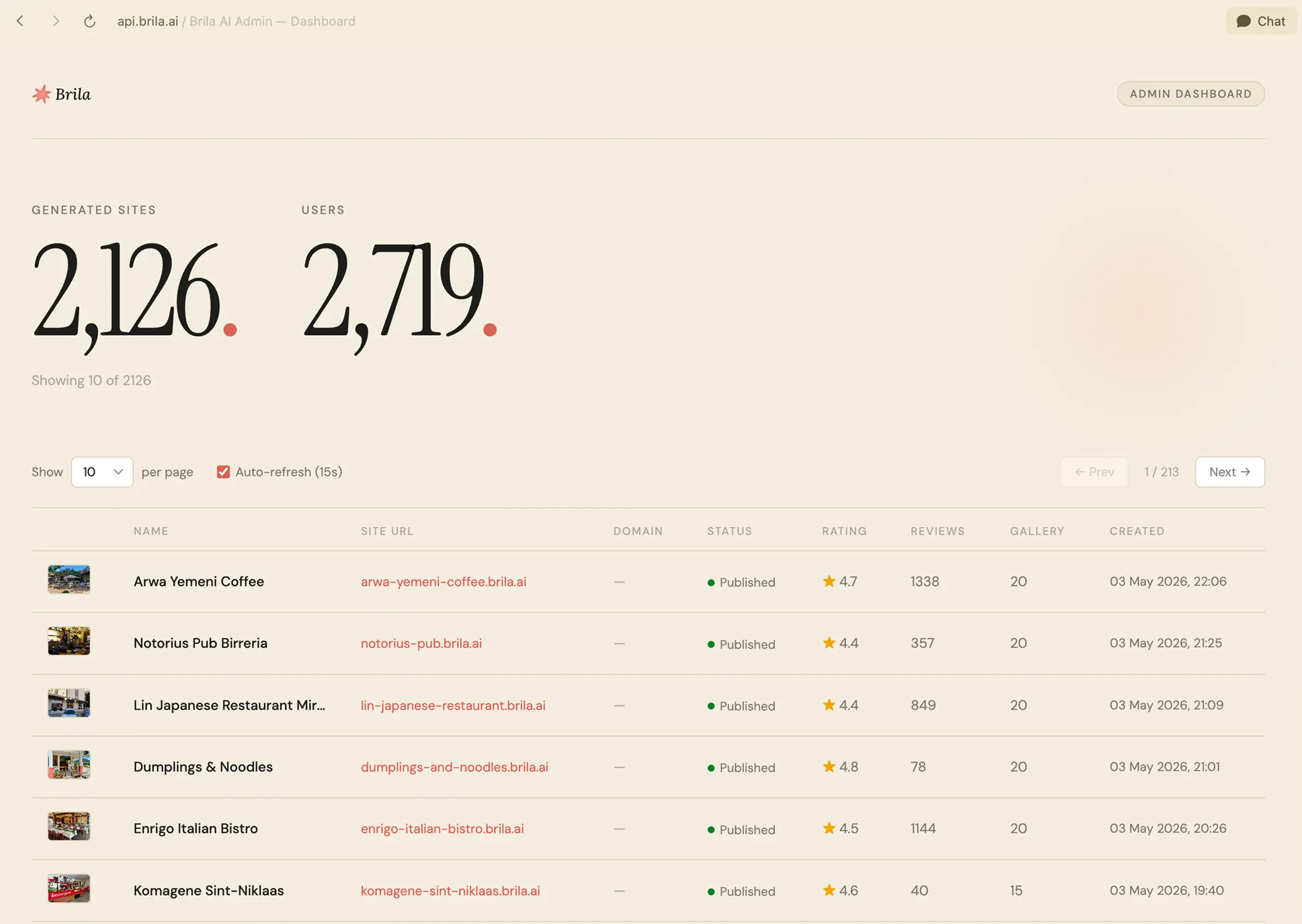
2,000+ websites generated in three weeks. Zero ad spend.
#1 on Product Hunt. Product of the Day, Week, and Month. 1,300+ points. One of the biggest launches on the platform in 2026.
97.3% success rate. AI pipeline held up under real load. 912 out of 937 generations completed without errors.
50+ countries. From a fried chicken joint in Honolulu to a Northern Lights tour in Norway.
59 paid conversions. In the first three weeks, organically.